

Learning to play the piano is an exciting journey that combines creativity, discipline, and musical expression. No matter whether your dream is to play your favorite songs, perform live on stage, or just have music as a passion, having the right foundation at the beginning is vital. Most of the time, many students take up learning music with no idea which skills they should focus on first. It is possible for them to gain confidence and master playing through guided practice.
Taking part in structured piano lessons for beginners will help in acquiring knowledge without making errors. For those who wish to train professionally, getting enrolled in a piano class in Chennai will pave their way ahead.
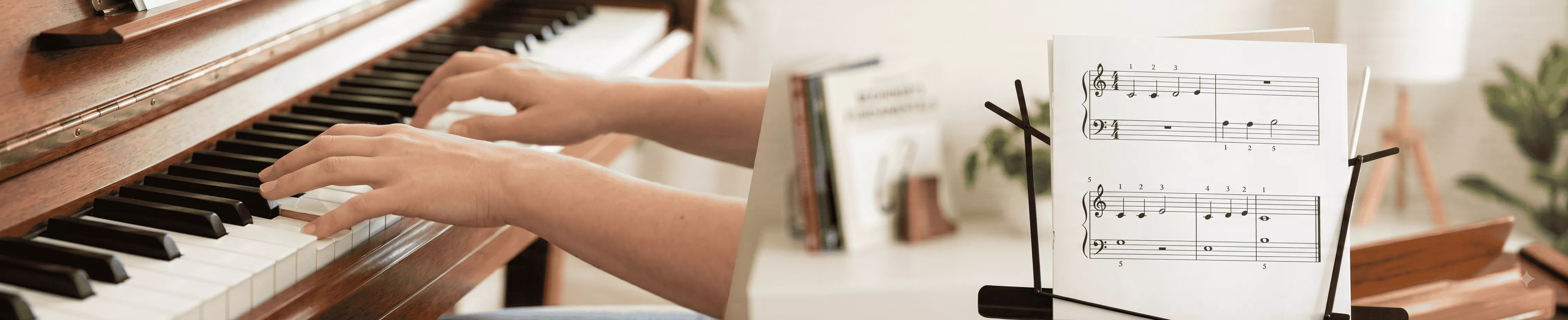
Essential piano concepts every beginner should know
Prior to embarking on learning complex melodies, there are some basic principles that should be understood.
- Among the most important ones is the layout of the keyboard.
- Understanding notes makes it easier to navigate around the keyboard.
- Another key principle is the finger numbering system. Each finger is numbered, and this makes it easy to follow exercise instructions from the book.
- Knowledge of scales, octaves and note relationships is also an important principle that helps students to develop a strong foundation.
Essential skills every piano beginner must learn
Understanding basic sheet music
Learning to interpret sheet music will help students play different songs on their own. As a beginner, students need to learn about the staff lines, different notes, and music symbols. Reading music will aid the students' musical ability and ease in learning different songs.
Developing rhythm and tempo
Rhythm plays an integral part in music. It is important for the learner to understand how to count beats and maintain a steady pace in both singing and instrumental playing. The use of the metronome will be useful when tackling this aspect of music.
Scales and finger exercises practice
Scales help learners build strength and coordination of hands. Finger exercises help learners in flexibility, accuracy and prepare them for complex pieces of music.
Playing chords and chord progression
Chords are essential parts in music making. Beginners should learn how to play major and minor chords together with a few simple chord progressions. This makes it easy for them to follow music pieces.
Coordination of the hands
The use of both hands at once can be challenging for new learners. With the help of regular practice, learners can develop their hand coordination skills and play complex music pieces.
Listening and ear training
Students who listen carefully will be able to identify the different elements of a song, including the melody and note relationship.
Why beginners should start with professional piano lessons
Many beginners attempt to learn piano through videos or mobile applications. Even though they may be quite useful, such sources sometimes fail to provide individualized feedback. It is important to receive proper guidance right from the start since it will decrease the possibility of developing habits that are difficult to correct later.
Having an experienced professional who can find strengths and weaknesses will make progress faster for the learners. In addition, structured piano lessons for beginners will be able to learn music theory, practice rhythm playing, and do other necessary work in a methodical way.
What happens during your first piano class?
The first lesson is designed to help students become comfortable with the instrument and understand basic concepts. The instructor begins by making the students familiar with the structure of the keyboard, which entails talking about the keys and notes.
Some of the aspects that are taught include proper posture while seated, correct posture of the hands, and finger positioning techniques. In addition, rhythmic training could be included in the course plan. A good piano class in Chennai will enable students to distinguish the keys and play a song from the very first session.
Piano learning roadmap: What you can achieve in the first 6 months
| Learning Stage | Skills Developed |
|---|---|
| Month 1 | Understanding the keyboard, note recognition, finger exercises, and simple melodies. |
| Month 2 | Reading basic sheet music, improving rhythm, and building finger coordination. |
| Month 3 | Playing with both hands together and performing beginner-friendly songs. |
| Months 4–6 | Learning scales and chords, improving technique, and confidently playing complete songs. |
Common mistakes beginners make while learning piano
Students have to overcome many of the hurdles during the early stage of their piano lessons.
- Skipping over the basics and learning complex songs.
- Irregular practice without a proper schedule.
- Using wrong hand postures while playing the piano.
- Not practicing rhythm and timing.
- Playing at an extremely fast pace without being accurate first.
- Not working on scalable practices.
- Getting frustrated easily instead of practicing patiently.
How much practice does a beginner need?
Consistency along with planned piano lessons for beginners is far more important than spending long hours at the piano. Beginners will make significant improvement if they dedicate 20 to 30 minutes every day to practicing. In general, shorter, but intense practice periods are usually more effective than lengthy ones.
The practice must include warm-ups, playing scales, rhythm exercises, and learning songs. The students must have realistic goals to set for themselves in order to motivate themselves during their practice.
Benefits of joining a piano class in Chennai
Learning in the structured environment of a piano class in Chennai offers several advantages for beginners.
- Learning from professional piano teachers.
- Following an organized curriculum designed for beginners.
- Receiving personal feedback in order to improve yourself.
- Developing confidence by practicing and performing consistently.
- Learning how to play the piano correctly, learning the rhythm and reading music.
Choosing the right piano course for beginners
Course selection has a significant part to play in the process of learning. Prior to enrollment, a lot of thought needs to be given to the qualification, approach, and curriculum used by the tutor.
For beginners, the course curriculum should contain music theory, practicals, scale training, rhythm training, and singing songs.
It would be wise to select a course that provides evaluation opportunities and singing performances regularly. This way, learners will build their confidence and track their progress.
Beginner-friendly songs to learn on piano
Learning simple songs can add excitement to the initial stage of learning to play the piano. Some songs that make it easy for the students to practice their skills and boost confidence include those from children's melodies, folk songs, and classical music adapted for beginners.
These songs have easy rhythms and notes to play. With time, students can move to other complex songs and acquire different techniques in the process. Learning songs is a way to celebrate the little milestones in a fun way.
Transform your passion into musical confidence
Piano lessons are an enriching process that develops creative skills, focus, discipline, and self-confidence. Piano lessons should always take into consideration vital factors like music theory, timing, scale, chord, hand coordination, and listening skills, thereby ensuring that beginners receive proper training to build their foundation.
Tune In, the best music school in Chennai, offers expert guidance and provides structured classroom instruction worldwide to help you become confident in yourself through our online music classes from India along with other experienced teachers.
Join Tune In and discover how the right training, consistent practice, and expert mentorship can turn your musical goals into reality.